
“Art can be said to be-and can be used as- the externalized map of our interior self”
What is Expressive Arts Therapy?
What will a therapy session be like?
How does the creative process help with mental health?
Short Version:
Creativity in therapy promotes well-being and heals suffering.
Longer Version:
The imagination and creativity through the arts has been a source of meaning making and healing historically and across human cultures.
Expressive Arts Therapy, along with the other creative therapies such as Music Therapy, Art Therapy and Dance Movement Therapy, is an evidence based therapeutic modality that uses creative expression to respond to suffering (Levine and Levine, 1999). It is a validated treatment approach that engages the brain’s own natural healing mechanisms to promote well-being.
Creative therapies are action oriented and can be motivating for those with mood disorders that lead them to feel stuck (e.g. depression).
The arts are sensory-based and therefore uniquely poised to support nervous system regulation to help with issues like ADHD, Autism Spectrum Disorder and Anxiety disorders, and trauma.
Art facilitates a non-judgmental, open stance towards oneself and the world. In therapy it can help you to connect to yourself with calm and confidence by gaining access to your inner wisdom and self-expression.
Further Resources:
Expressive Arts Therapy: An Integrated Approach by Karen Estrella (Chapter in Expressive Therapies by Malchiodi, C., 2005)
Short Version:
In an Expressive Arts Therapy session your therapist will guide you to engage the creative process to enter a state of flow to heal and grow experientially.
Longer Version:
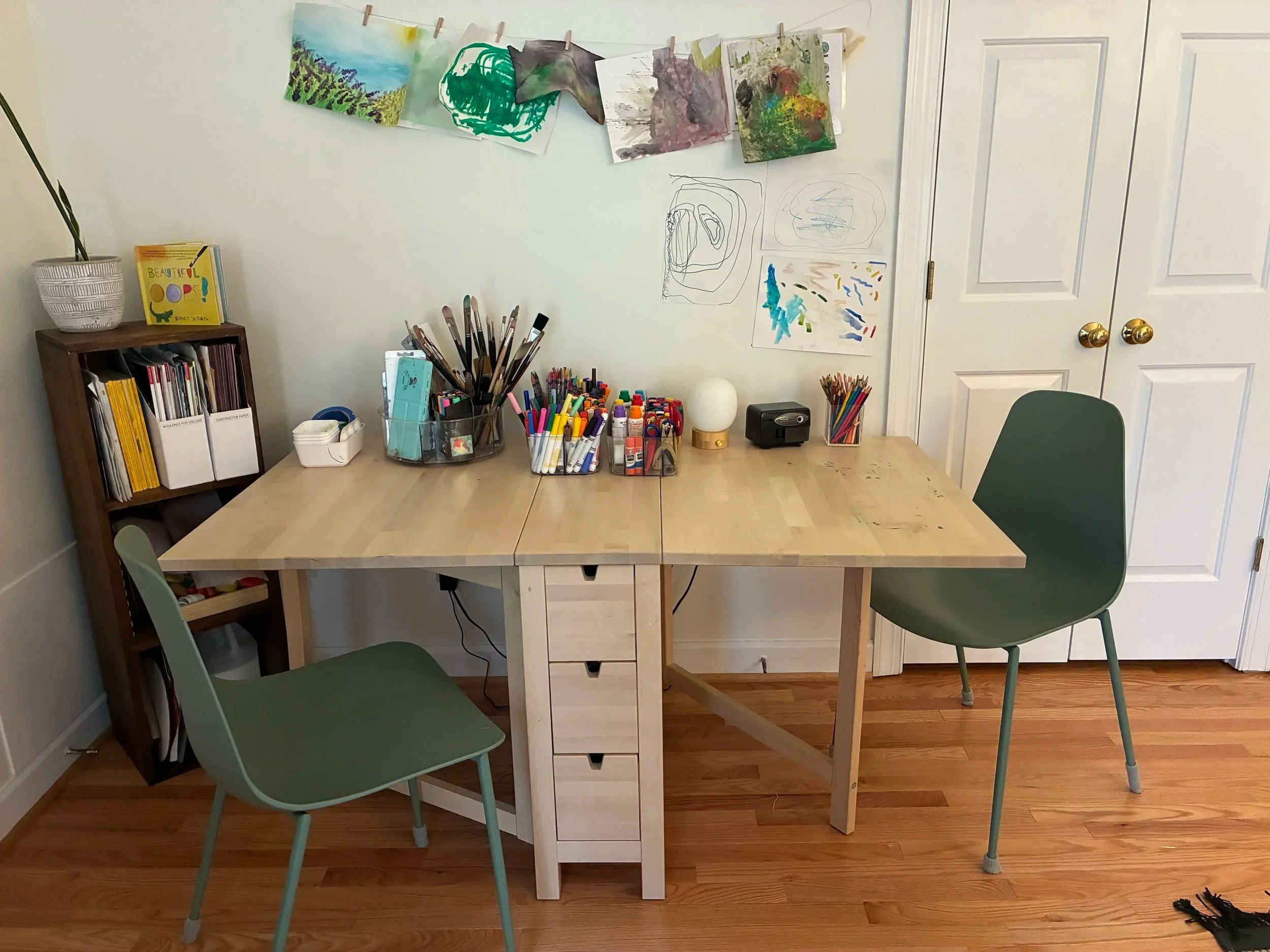
Just like in a other forms of mental health counseling we begin by establishing goals and discussing what brought you in to therapy. Sessions might begin with checking in and then guidance towards using art materials and creative expression to express emotions, explore a topic or to help manage stress and regulate your nervous system. Art-making might involve visual art media, music, movement and/or creative writing.
Expressive arts therapy often involves following the creative process across media; even the simplest artistic seed can yield endless fruits of therapeutic exploration. During a session we might begin by exploring an issue using guided imagery, then visualizing an aspect of this guided imagery with painting, and finally transition to dialoguing with your painting to gain insight into unmet needs or to discover parts of yourself that are worth exploring more deeply.
The therapy process is different for everyone. Expressive arts therapy has the benefit of being able to offer myriad modes of expression and opportunities for finding your creative, and perhaps also mental/emotional edge.
The therapist’s role is to be a witness, guide and support in the creative process, as well as a monitor of your progress towards treatment goals. During a session your therapist might quietly observe you as you create, or might create alongside you as the art therapy space is a place free of judgment or critique. Art-making can also be an inherently collaborative endeavor and the act of reflecting on your work together with the therapist is often deeply meaningful and healing.
The International Expressive Arts Therapy Association (IEATA) defines Expressive Arts Therapy as a combination of "the visual arts, movement, drama, music, writing and other creative processes to foster deep personal growth and community development. IEATA encourages an evolving multimodal approach within psychology, organizational development, community arts and education. By integrating the arts processes and allowing one to flow into another, we gain access to our inner resources for healing, clarity, illumination and creativity."